




Curiosities from the oil mill
Tonda Iblea: Characteristics, Sensory Profile, PDO, and Culinary Pairings
The Tonda Iblea is the symbolic cultivar of eastern Sicily – the one on which the Monti Iblei PDO is based and a large part of the reputation of Iblean extra virgin olive oil in the world. It is not the most intense cultivar nor the one with the most aggressive polyphenolic profile: it is the most elegant, most balanced, most difficult to tame well. In this guide, you'll find everything about its sensory profile, agronomic characteristics, PDO, and how to pair it in the kitchen.
Origins and geographical distribution
The Tonda Iblea takes its name from the Iblei Mountains – the limestone plateau covering the provinces of Ragusa, Siracusa, and part of Catania. It is an indigenous cultivar of this area, cultivated for centuries on plateaus between 200 and 600 meters, where temperature excursions between night and day are marked, and the draining calcareous soils favor controlled water stress that concentrates aromatic compounds in the olives.
Its spread outside Sicily is almost non-existent – the Tonda Iblea is a strictly territorial cultivar. Attempts to plant it elsewhere have not produced the same results: the link with the Iblean terroir is real and not reproducible.
In the panorama of Sicilian cultivars, the Tonda Iblea is positioned between Nocellara del Belice (more intense, more robust) and Biancolilla (more delicate, lighter). It is the middle cultivar – but not in the sense of a compromise. It is the one with the most complex profile and the greatest ability to age well in the bottle. For a comparison of all Sicilian cultivars: guide to the 6 main Sicilian olive cultivars.
Agronomic characteristics
The Tonda Iblea is a dual-purpose cultivar – it produces both oil olives and table olives, although oil production is prevalent in the Iblean area. Some relevant characteristics for those who want to understand why this oil is what it is:
Medium-late ripening: olives reach veraison between late October and November. Quality producers harvest early – in September-October, when the olives are still green or just at veraison – to maximize polyphenolic concentration at the expense of yield.
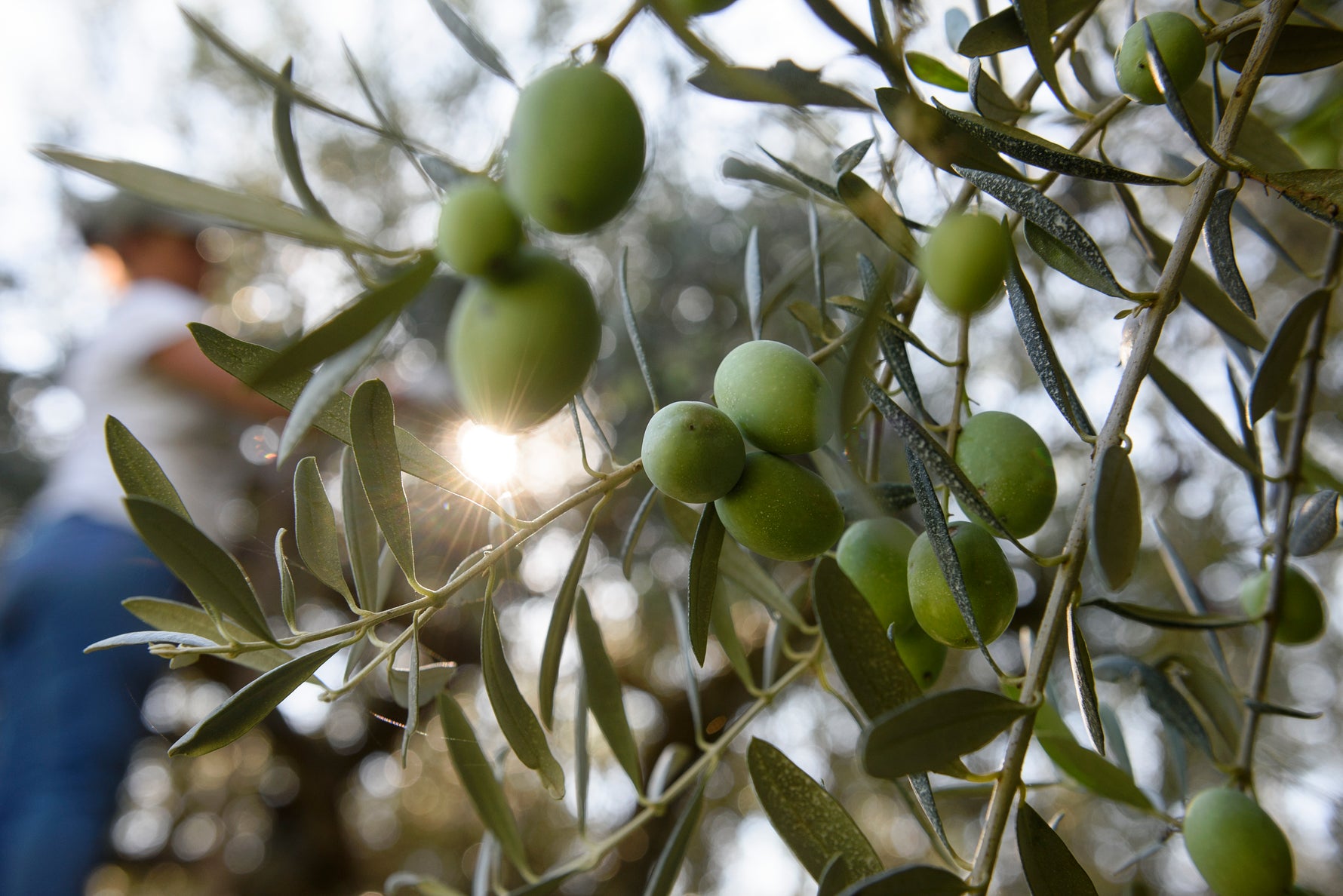
Medium-large drupe: regular spherical shape, green color that turns to wine-red and then black at full ripeness. The name "Tonda" (round) precisely describes this characteristic round shape.
Medium oil yield: around 16-20% of the olive weight. It is not the most productive cultivar – but the quality of the oil amply justifies the cost.
Good disease resistance: tolerant to olive knot (Pseudomonas savastanoi) and relatively resistant to the olive fruit fly (Bactrocera oleae), also thanks to the altitude of the Iblean olive groves which reduces pest pressure.
Sensory profile of Tonda Iblea oil
The sensory profile of Tonda Iblea is what immediately distinguishes an expert taster from someone who only knows simpler oils. It is not an oil that imposes itself – it reveals itself gradually.
Fruity: medium, with prevalent notes of fresh almond and mown grass. Less green tomato than Nocellara, more floral. In early harvest oils, notes of artichoke and olive leaf emerge.
Bitter: medium, pleasant, not aggressive. A sign of good polyphenolic concentration without being astringent.
Pungent: medium, with a delay – it is felt in the throat a few seconds after tasting. This delay in pungency is a typical characteristic of Tonda Iblea that distinguishes it from Nocellara, where the pungency is more immediate and decisive.
Persistence: high. The almond aftertaste lingers for a long time – a sign of the oil's complexity and quality.
Color: intense green with golden reflections in early harvest oils. More golden in late harvest products.
The Monti Iblei PDO: what it certifies
The Monti Iblei PDO is the main protected designation of origin for Sicilian oil. The regulations protect oils produced in the provinces of Ragusa and Siracusa, predominantly from Tonda Iblea.
The main requirements of the regulations:
Cultivar: at least 80% Tonda Iblea (some sub-zones allow Moresca and Nocellara Etnea up to 20%)
Harvest: exclusively by hand or with mechanical aids – no harvesting by falling
Milling: within 48 hours of harvest
Maximum acidity: 0.5% (more restrictive than the standard EVO limit of 0.8%)
Fruity: present at the official panel test
The PDO does not automatically guarantee excellence – there are PDO producers who work at the minimum of the regulations and non-PDO producers who produce superior oils. But it is the best formal guarantee system available for guidance.
Pairings in the kitchen
Tonda Iblea is an oil to be used primarily raw, as a finishing touch. Its aromatic complexity is best expressed when not altered by heat.
Raw and cooked fish: it is the quintessential pairing. On tuna carpaccio, salt-baked sea bream, grilled sea bass, raw shrimp – the almond and floral profile does not overpower the fish. It is rare to find an oil that works so well on delicate fish preparations.
Boiled and steamed vegetables: asparagus, zucchini, green beans – Tonda Iblea enhances their flavor without altering it. A drizzle of raw oil is sufficient.
Fresh cheeses: Sicilian ricotta, primo sale, burrata – the oil adds complexity without covering the sweetness of the cheese.
Legume soups: lentil soup, pasta and chickpeas, ribollita – the fruitiness of Tonda Iblea integrates perfectly with the earthy flavors of legumes.
Classic bruschetta: bread + garlic + Tonda Iblea – one of the simplest and most revealing pairings of the oil's quality.
Desserts: some Sicilian preparations – cannoli, cassata, almond sweets – use EVO oil instead of butter. Tonda Iblea, thanks to its almond notes, is the most consistent choice.
Frantoi Cutrera's Tonda Iblea
Frantoi Cutrera has been producing in Chiaramonte Gulfi, in the heart of the Iblean territory, for four generations. Tonda Iblea is their house cultivar – the one with which the oil mill has built its international reputation.
Two labels for this cultivar:
Primo PDO Monti Iblei: our reference oil. PDO certified, hand-harvested, milled within 24 hours. Notes of fresh almond, artichoke, and grass. Acidity typically below 0.3%. Award-winning in the main international guides – Flos Olei, Gambero Rosso, Slow Food.
Tonda Iblea Giovanni Cutrera: monocultivar from selected Tonda Iblea, produced in collaboration with Giovanni Cutrera to enhance the Iblean cultivar in its purest expression. More floral and almond profile, pronounced elegance and gustatory-olfactory length.
Frequently asked questions about Tonda Iblea
What is Tonda Iblea?
It is an indigenous oil olive cultivar grown on the Iblean plateaus of the provinces of Ragusa and Siracusa, in Sicily. It is the base cultivar of the Monti Iblei PDO and produces an extra virgin olive oil with a balanced sensory profile – medium fruity with almond notes, bitterness, and pungency present but not aggressive.
What is the difference between Tonda Iblea and Nocellara del Belice?
Nocellara is more intense – more decided fruitiness, green tomato notes, more immediate and pronounced pungency. Tonda Iblea is more elegant and balanced – almond fruity, delayed pungency, greater persistence in the mouth. Nocellara is more suitable for robust dishes (meat, soups, bruschetta); Tonda Iblea works better with fish, vegetables, and fresh cheeses.
What does Monti Iblei PDO mean?
It is a protected designation of origin that certifies that the olives and processing take place in the provinces of Ragusa and Siracusa, with at least 80% Tonda Iblea cultivar, hand harvest, and maximum acidity of 0.5%. It guarantees the geographical origin and compliance with production regulations.
How is Tonda Iblea used in cooking?
Primarily raw as a finishing touch – on fish, vegetables, fresh cheeses, legume soups. It is not the ideal oil for prolonged frying: its aromatic complexity is lost with heat. For frying and cooking, use an everyday blend like Pertutto; Tonda Iblea is reserved for the final seasoning.

Sicilian Olive Varieties for Oil: Guide to the 6 Main Cultivars
Complete guide to the main Sicilian olive cultivars for extra virgin olive oil production: Nocellara del Belice, Tonda Iblea, Biancolilla, Cerasuola, Moresca, and Nocellara Etnea. For each: territory, botanical characteristics, sensory profile, and culinary pairings.