The Mediterranean diet is the most extensively studied dietary pattern in the world in relation to cardiovascular health, longevity, and the prevention of chronic diseases. At its core is extra virgin olive oil—not as an accessory condiment, but as the primary source of fats. In this guide, you'll discover what research truly says, what distinguishes the Mediterranean diet from other dietary patterns, and why the quality of the oil changes everything.
What is the Mediterranean Diet: History and Definition
The term "Mediterranean diet" was coined by American physiologist Ancel Keys in the 1950s-60s, after observing that populations in Southern Italy, Greece, and Spain had significantly lower rates of cardiovascular disease compared to Americans and Northern Europeans—despite consuming high amounts of fat.
The Seven Countries Study (1958-1970), conducted by Keys on 12,763 men aged 40-59 in seven nations, was the first to systematically document this correlation. The discovery that Mediterranean fats—predominantly monounsaturated from olive oil—behaved differently from animal saturated fats profoundly changed modern nutrition.
In 2010, UNESCO inscribed the Mediterranean diet on the Representative List of the Intangible Cultural Heritage of Humanity—not just as a dietary model but as a comprehensive lifestyle that includes conviviality, seasonality, and food culture.
Fundamental Principles
The Mediterranean diet is not a "diet" in the popular sense of the term—it does not prescribe portions or calories. It is a food selection model built around clear priorities:
Abundance of vegetables: Fruits, vegetables, legumes, whole grains, nuts, and seeds form the daily base. Not side dishes—the base.
Extra virgin olive oil as the primary fat: Replaces butter, margarine, and seed oils in all preparations. It's not an aesthetic choice—it's the biochemical heart of the model.
Fish and seafood two-three times a week: Source of protein and long-chain omega-3s (EPA and DHA).
Moderate consumption of dairy: Primarily aged cheeses and yogurt, not milk.
Limited red meat: Rarely, as a condiment rather than the main focus of the meal.
Red wine in moderation: During meals, not as a solitary habit. Resveratrol and polyphenols from quality red wine contribute to the protective effects of the model.
Herbs instead of salt: Oregano, basil, rosemary, thyme—reducing sodium and adding bioactive compounds.
The Role of Extra Virgin Olive Oil in the Mediterranean Model
Extra virgin olive oil is not interchangeable with other fats within the Mediterranean diet. The populations studied by Keys did not use generic olive oil—they used artisanal, cold-pressed extra virgin olive oil, rich in polyphenols. This distinction is fundamental to understanding the study results.
The mechanisms through which EVOO contributes to the effects of the Mediterranean diet:
Oleic acid and lipid profile: Monounsaturated fats (55-83% in EVOO) reduce "bad" LDL cholesterol without lowering "good" HDL, improving the LDL/HDL ratio—one of the most predictive markers of cardiovascular risk.
Polyphenols and inflammation: Oleuropein, hydroxytyrosol, and oleocanthal have documented anti-inflammatory effects. Oleocanthal, in particular, inhibits the same enzymatic pathways as ibuprofen—hence the hypothesis that chronic low-grade inflammation, associated with multiple chronic diseases, is one of the main targets of the Mediterranean diet.
Oxidative protection: Vitamin E and polyphenols in EVOO neutralize free radicals. The oxidation of LDL cholesterol is the first step in the formation of atherosclerotic plaques—slowing it down has direct effects on cardiovascular health.
Satiety and glycemic control: Monounsaturated fats slow gastric transit, modulate insulin response, and increase satiety. This reduces post-prandial glycemic peaks, relevant in the prevention of type 2 diabetes.
To learn more about the specific role of polyphenols: polyphenols in EVOO: the secret of the Mediterranean diet.
Main Scientific Evidence
The Mediterranean diet is among the dietary patterns with the most robust body of evidence in the literature. The most important references:
PREDIMED Study (2013): 7,447 participants at high cardiovascular risk, randomized into three groups—Mediterranean diet with extra virgin olive oil, Mediterranean diet with nuts, low-fat diet. After 4.8 years, the Mediterranean groups had a 30% reduced risk of major cardiovascular events compared to the control group. The effect was more pronounced in the EVOO group—4 tablespoons per day.
PREDIMED-Plus Study (2020, update): Confirms the results on a larger cohort with longer follow-up.
Mediterranean Diet Score and total mortality: A meta-analysis of 12 prospective studies (1,574,299 subjects) showed that high adherence to the Mediterranean diet is associated with a 9% reduction in total mortality, 9% in cardiovascular mortality, 6% in cancer risk, and 13% in the risk of Parkinson's and Alzheimer's.
An important critical note: many of these studies are observational—they show correlation, not direct causality. The Mediterranean diet is also associated with other factors (physical activity, climate, social structure) that are difficult to isolate. However, randomized trials like PREDIMED provide more robust causal evidence than almost any other studied dietary pattern.
Why Oil Quality Changes the Results
One of the most common mistakes in interpreting studies on the Mediterranean diet is assuming that "olive oil" is a homogeneous category. It is not.
The concentration of polyphenols in extra virgin olive oil varies enormously based on:
Cultivar: Nocellara del Belice and Tonda Iblea have much higher polyphenol profiles than Biancolilla
Harvest time: Olives harvested in October vs. December can have 3-4 times different polyphenol concentrations
Extraction process: Temperature, duration, and oxygenation influence polyphenol preservation
Oil age: Polyphenols degrade over time—an 18-month-old oil has significantly reduced concentrations compared to a 3-month-old one
An inexpensive supermarket extra virgin olive oil, made from mature olives, extracted at high temperatures, and stored for a long time, can have a polyphenol concentration 10-20 times lower than an artisanal, early harvest monocultivar. In the context of the Mediterranean diet, they are not equivalent.
To understand how to recognize quality extra virgin olive oil on the label: complete guide to olive oil: how to read the label.
How to Apply the Mediterranean Diet in Practice
Three concrete operating principles:
Substitute, don't add: The point is not to add EVOO to your current diet—it's to replace butter, margarine, seed oil, and saturated fats with extra virgin olive oil. The optimal amount from studies is 3-4 tablespoons per day.
Use it both raw and for cooking: EVOO is thermally stable due to oleic acid and antioxidants. Using it only raw is an aesthetic choice, not a technical necessity. The smoke point of EVOO (180-210°C) makes it suitable for most home cooking. For details: olive oil smoke point.
Choose quality: 3-4 tablespoons per day of quality oil costs about €0.50-0.80 per day. The difference compared to a discount oil is not negligible if the goal is to leverage the benefits documented by research.
Sicilian Extra Virgin Olive Oil in the Mediterranean Diet
Sicily is among the Italian territories with the longest documented history of olive oil production and adherence to the Mediterranean model. Native Sicilian cultivars—Tonda Iblea, Nocellara del Belice, Biancolilla—produce oils with some of the highest polyphenol profiles in Europe, thanks to the warm climate with marked temperature variations and traditions of early harvesting.
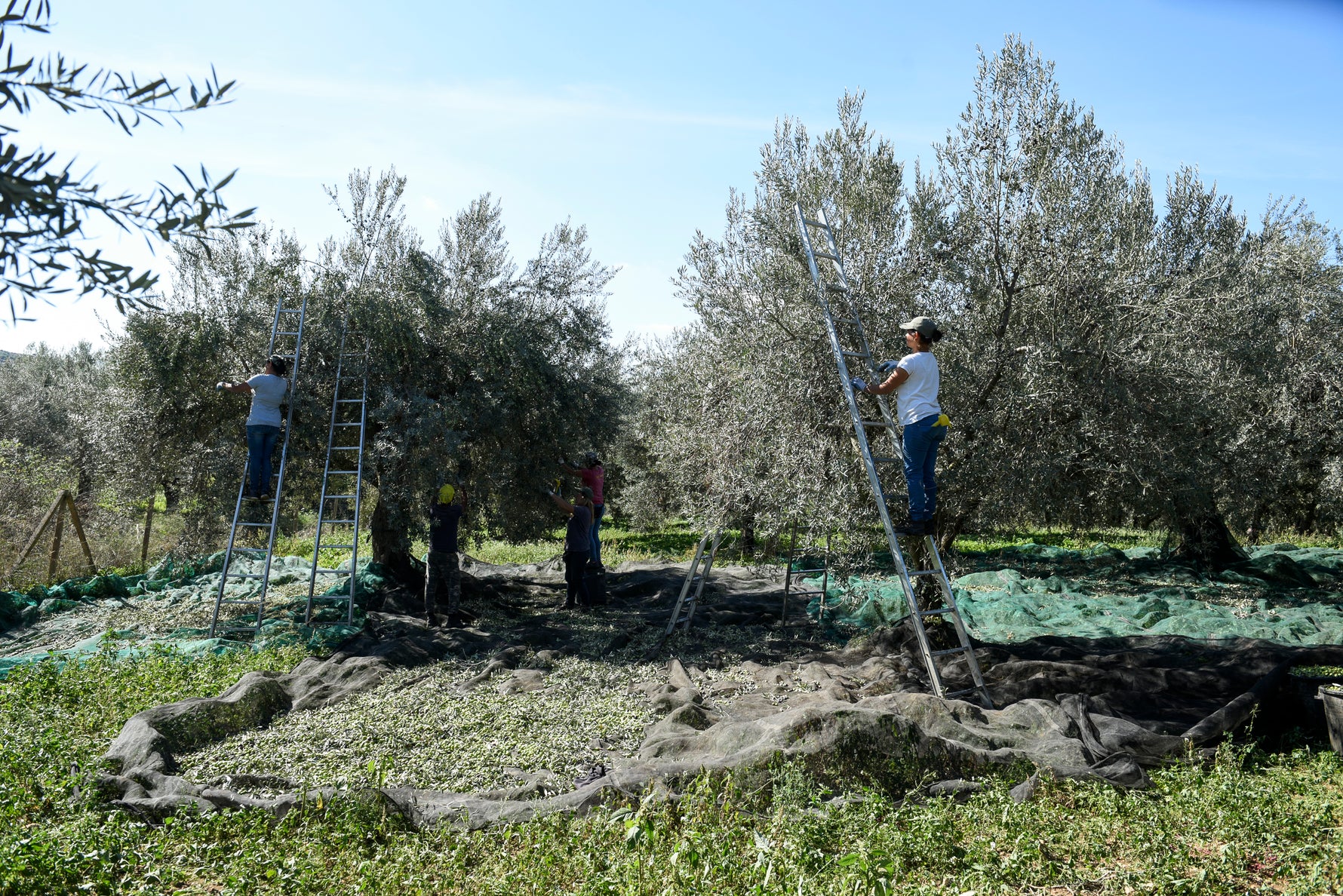
Frantoi Cutrera's Primo DOP Monti Iblei is the product that best expresses this terroir: extracted from Tonda Iblea olives from the Iblei Mountains in Ragusa, hand-picked in October, milled within 24 hours. All that studies indicate as optimal for the concentration of bioactive compounds.
For a complete overview of Sicilian cultivars and their profiles: Sicilian olive varieties for oil.
Frequently Asked Questions
How many tablespoons of olive oil per day in the Mediterranean diet?
Studies with the most significant results (PREDIMED) used 4 tablespoons per day (about 50 ml) in the EVOO group. Traditional values of Mediterranean populations studied in the 1960s were similar. There is no universal value, but 3-4 tablespoons per day as the primary fat (replacing other fats) is the range supported by research.
Does the Mediterranean diet cause weight loss?
It is not designed for weight loss—it is a model of food quality, not caloric restriction. That said, monounsaturated fats increase satiety and improve glycemic control, which can indirectly reduce overall caloric intake. Studies show less association with obesity compared to Western diets high in saturated fats and refined sugars.
What is the difference between the Mediterranean diet and the Italian diet?
The modern Italian diet has significantly moved away from the Mediterranean model: more red meat, more cheese, more industrial products, fewer legumes and vegetables compared to 50-60 years ago. The original Mediterranean diet documented by Keys refers to the diet of peasant populations in the Mediterranean in the 1950s—not contemporary Italian cuisine.
Is olive oil the best fat for the Mediterranean diet?
Yes, according to available evidence. Extra virgin olive oil has a superior fatty acid profile to main alternative vegetable oils (sunflower, corn, soy) due to its monounsaturated fatty acid content, and a concentration of antioxidants (polyphenols, vitamin E) that refined oils cannot have. The mix of oleic acid + polyphenols is likely synergistic—more effective than isolated individual components.