

Home
>
Curiosities from the oil mill
>
Wild Olive Tree: What it Is, Why Its Oil Is So Rare, and What Makes it Unique

Wild Olive Tree: What it Is, Why Its Oil Is So Rare, and What Makes it Unique
What is wild olive: botanical definition and differences from cultivated olive
The term wild olive refers to Olea europaea var. sylvestris, the wild form of the cultivated olive (Olea europaea var. europaea). Botanically, it is the same species, but with significant differences in terms of:
- Origin and selection: the cultivated olive is the result of centuries of agronomic selection aimed at productivity, yield, and ease of harvesting; the wild olive is the spontaneous, "untamed" form.
- Morphology: often thornier plants, irregular canopies, twisted trunks, less orderly development compared to a modern orchard.
- Fruit: smaller drupes, with a different skin/pulp/pit ratio and significantly lower oil yields.
In Sicily, and particularly in inland and hilly areas such as the Iblei Mountains, the wild olive can grow spontaneously or derive from old feral plants. Frantoi Cutrera selects specific wild olive trees with interesting agronomic and sensory characteristics, transforming them into a structured wild olive oil project called “Mille”.
Agronomic characteristics: rusticity and lower yields
From an agronomic perspective, the wild olive is distinguished by:
- Greater rusticity: adaptation to difficult pedoclimatic conditions (stony soils, little water, wind), deep root system.
- Lower productivity: compared to a modern olive grove, production per plant is reduced and irregular.
- Lower oil yield: smaller drupes, often with a higher pit percentage, lead to lower oil/kg of olives yields compared to selected cultivars.
This means that to obtain a certain quantity of wild olive oil, more olives and more time are needed, resulting in higher production costs and naturally limited volumes. This is one of the reasons why it is a very rare and intrinsically "niche" oil.
Sensory profile of wild olive oil: intensity, bitterness and pungency
From a sensory analysis perspective, oil obtained from wild olive generally presents:
- Very intense fruitiness: marked herbaceous aromas (cut grass, olive leaf), notes of artichoke, cardoon, Mediterranean wild herbs.
- High bitterness and pungency: taste perceptions significantly higher than the average of commercial EVOO, especially if the oil is obtained from early harvest.
- Persistent aftertaste: long aromatic persistence, with returns of bitter almond, herbs, spices.
These characteristics are linked both to the genetic heritage of the wild olive and to the growing conditions in often more "stressful" environments (poor soils, contained productive loads), which lead the plant to produce a greater quantity of defensive phenolic compounds.
Polyphenols and chemical composition: why wild olive oil is interesting
In many cases, wild olive oils show a higher total polyphenol content compared to EVOO from standard cultivated cultivars, especially if the olives are harvested very early and processed quickly and at low temperatures.
From a chemical point of view, this translates into:
- Higher polyphenol content (hydroxytyrosol, tyrosol, oleuropein and derivatives), responsible for bitterness, pungency and oxidative stability.
- High oxidative stability: greater resistance to rancidity thanks to the antioxidant action of polyphenols and tocopherols.
- Typically favorable fatty acid profile (high oleic acid content, moderate polyunsaturated content), in line with the best Mediterranean EVOOs.
These parameters make wild olive oil not only interesting from a sensory point of view, but also very suitable to be described as an oil with high nutraceutical value, while remaining a product to be tasted consciously, in small quantities and especially raw.
Why wild olive oil is rare and precious
The rarity of wild olive oil has concrete reasons:
- Limited number of selected plants: not all wild olive trees are suitable for producing high-quality sensory oil; careful selection is needed.
- Complex harvesting: irregular canopies, inaccessible terrain, difficulty in mechanization lead to longer harvesting times and higher costs.
- Low yields: fewer liters of oil per kg of olives compared to cultivars like Tonda Iblea, Nocellara, Biancolilla.
- Micro-batches: reduced volumes, often from single areas or single plants, which do not allow for mass production.
For these reasons, wild olive oil is not intended as "everyday oil," but as a special selection for sophisticated consumers, high-level restaurants, guided tastings, and specialized wine shops/delis.
When and how to use wild olive oil in cooking
Given its intensity, wild olive oil should be used judiciously. Some useful technical principles:
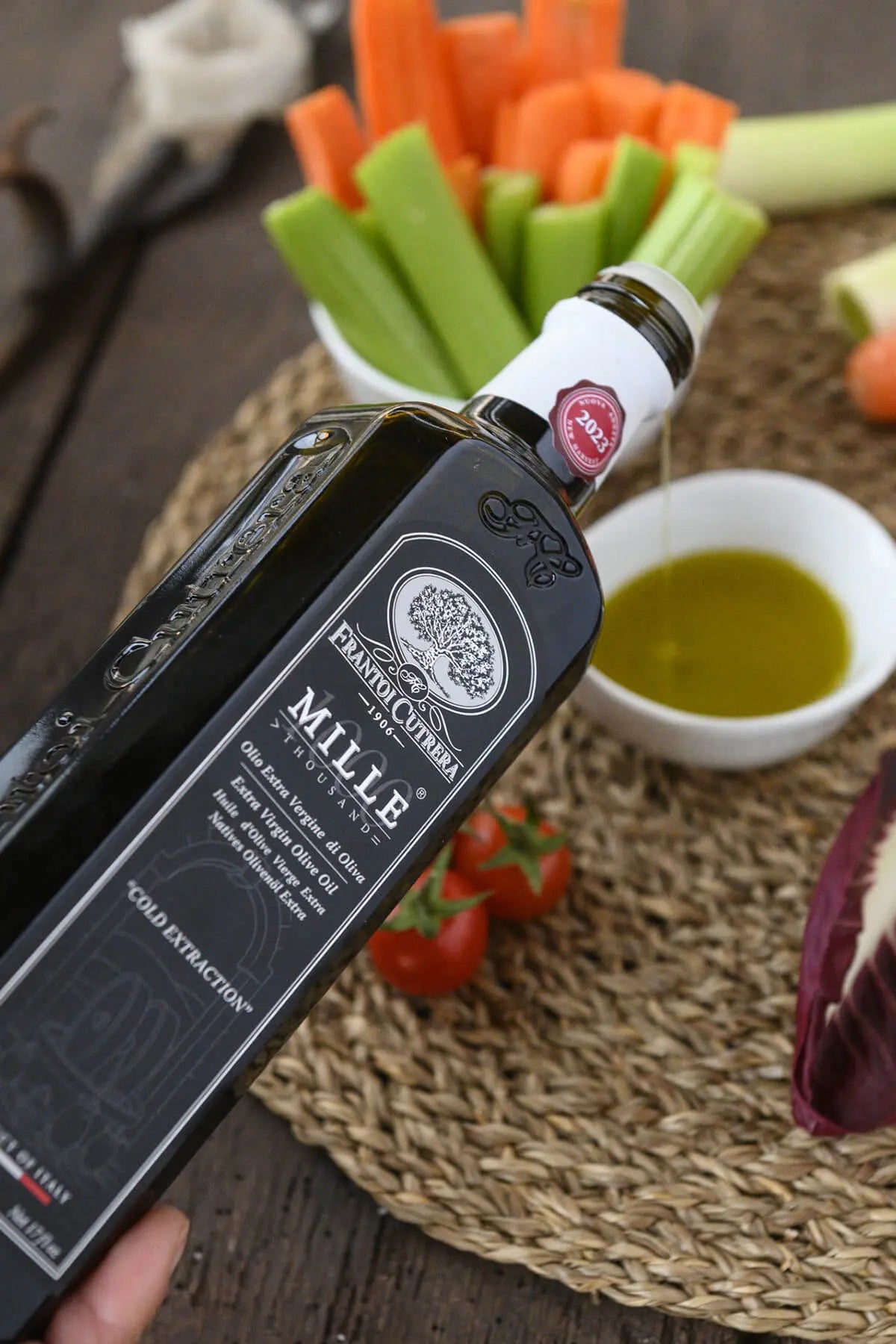
- Raw use: the maximum sensory and phenolic potential is expressed raw, on ready-to-eat dishes.
- Not for all preparations: not recommended for very delicate dishes (white fish, sweet vegetables, fresh dairy products) as it risks overpowering them.
- Ideal for structured dishes: legumes (chickpeas, lentils, beans), rustic soups, red meats, game, bitter vegetables (chicory, catalonia), aged cheeses.
- Controlled quantities: a few drops or a light drizzle are enough to characterize the dish.
An effectively instructive use is comparative tasting: taste the same dish (e.g., legume soup or bruschetta) with a "classic" Frantoi Cutrera EVOO and with wild olive oil, to immediately perceive the differences in structure and intensity.
Mille by Frantoi Cutrera: the technical interpretation of wild olive
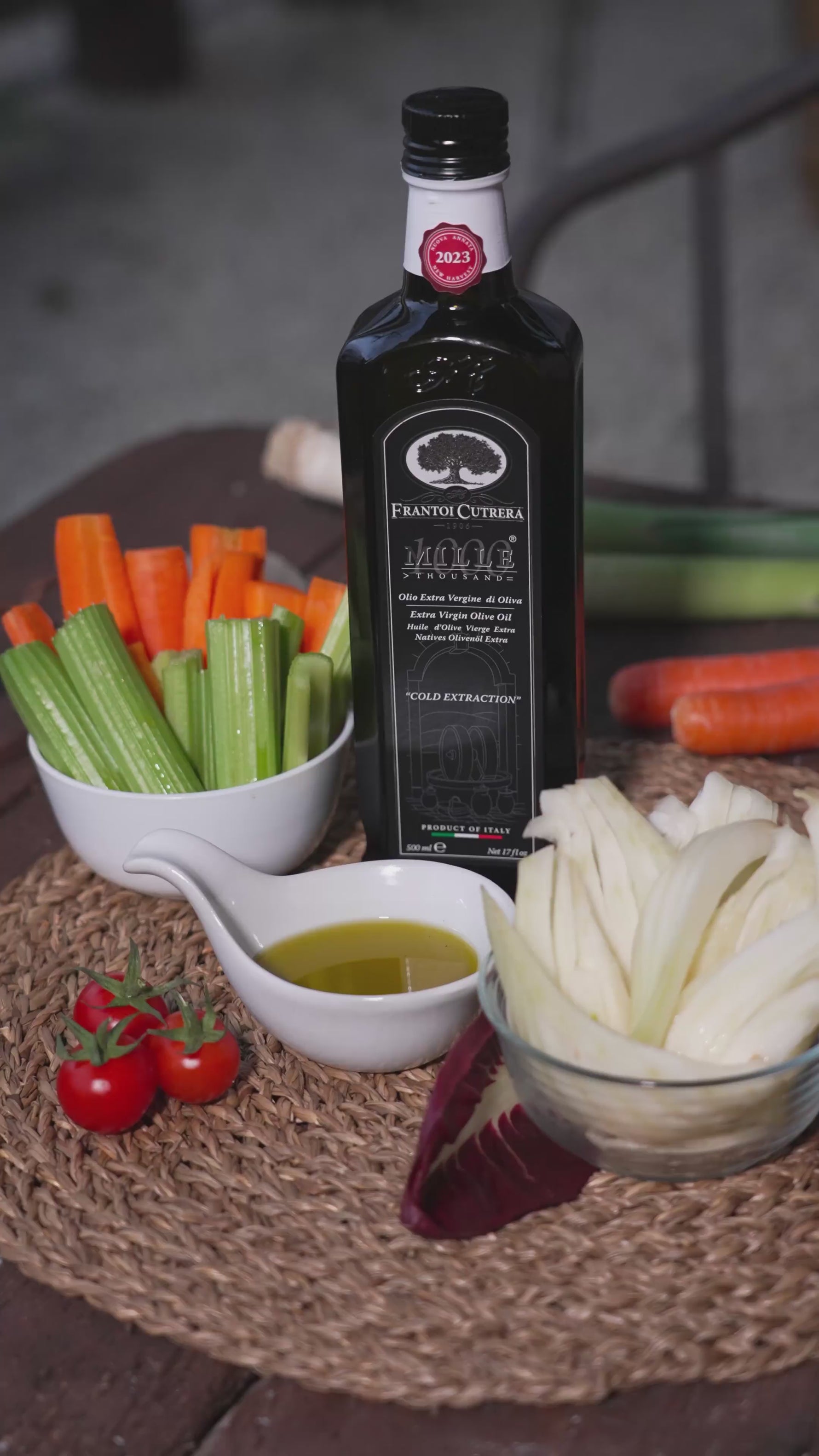
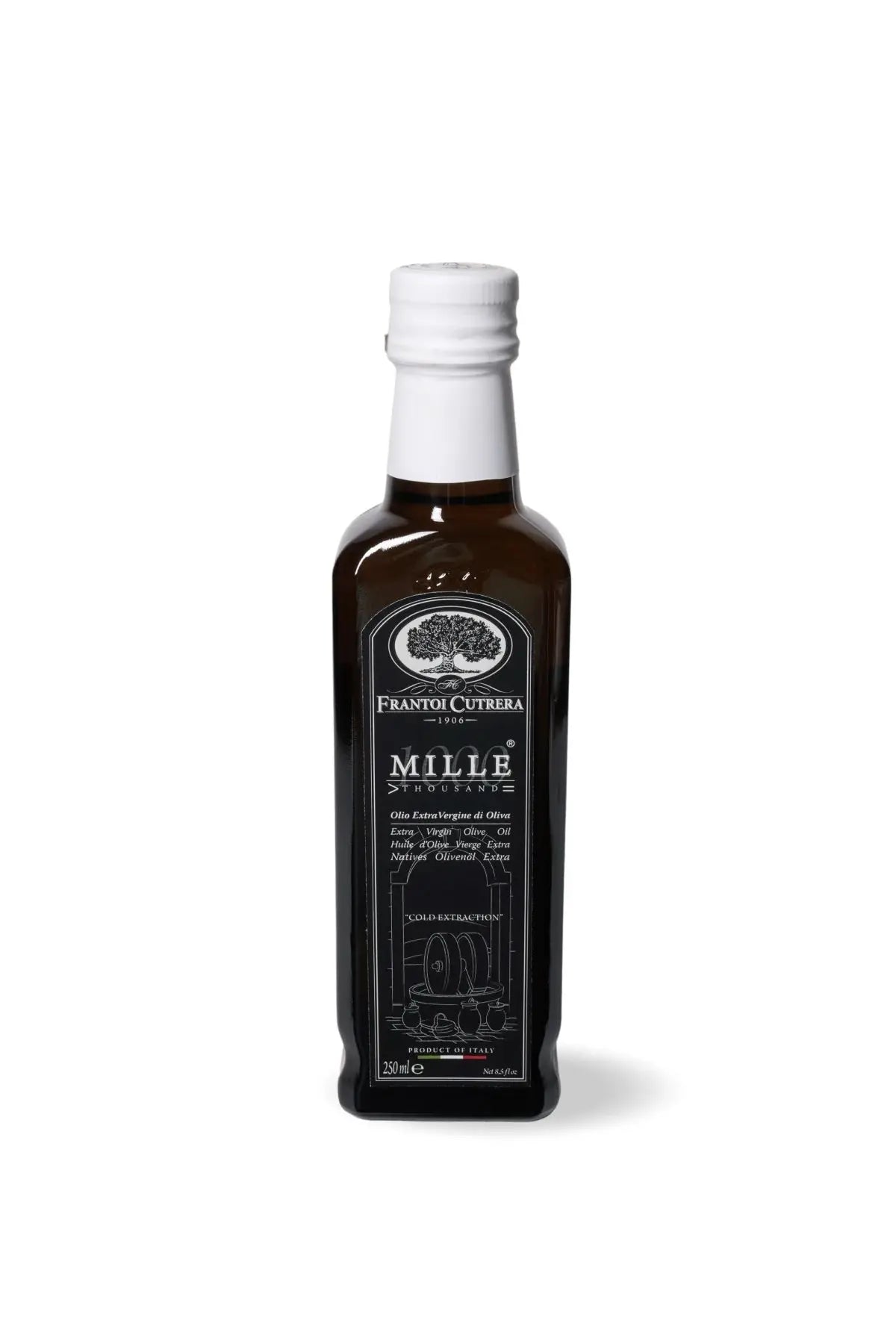
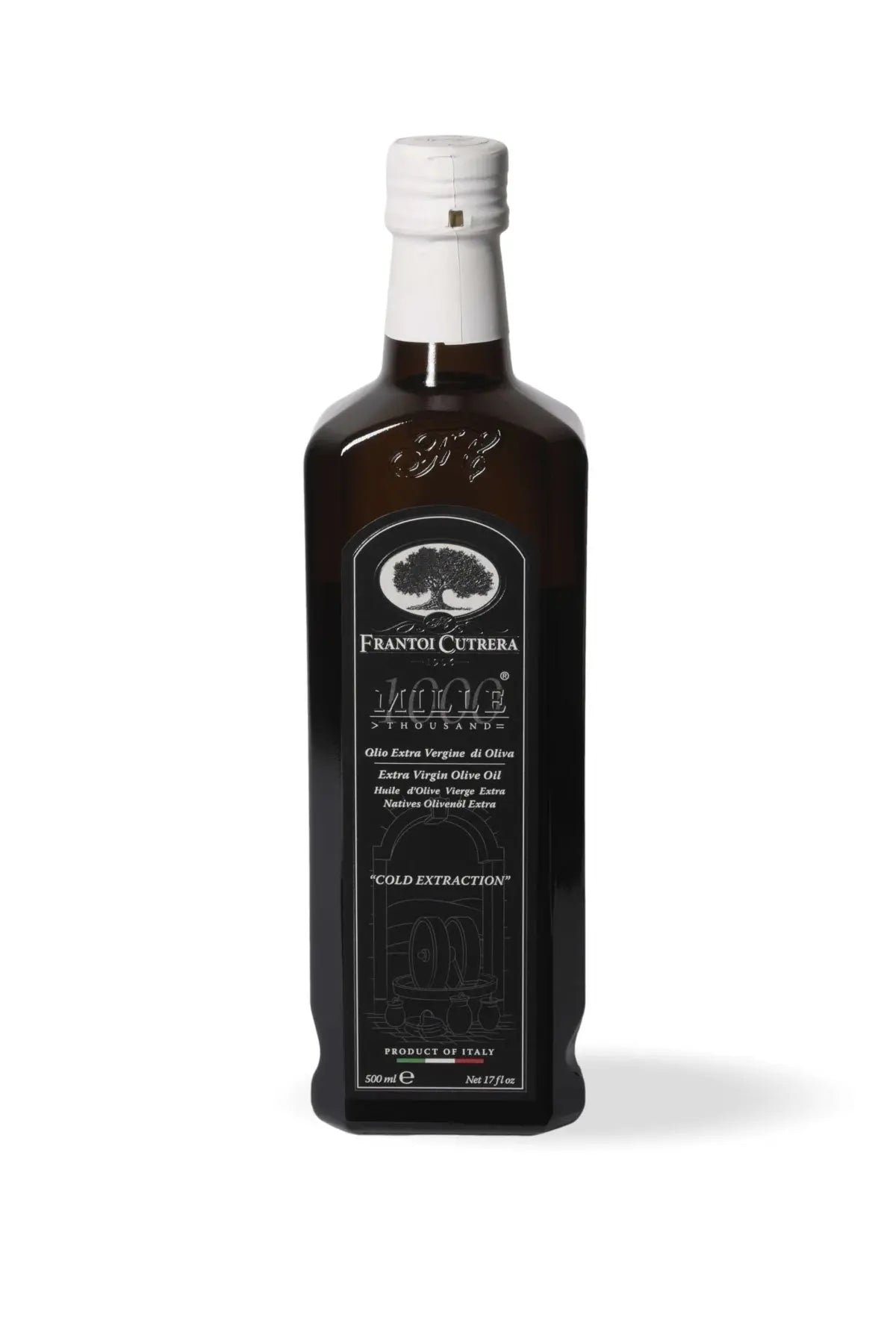
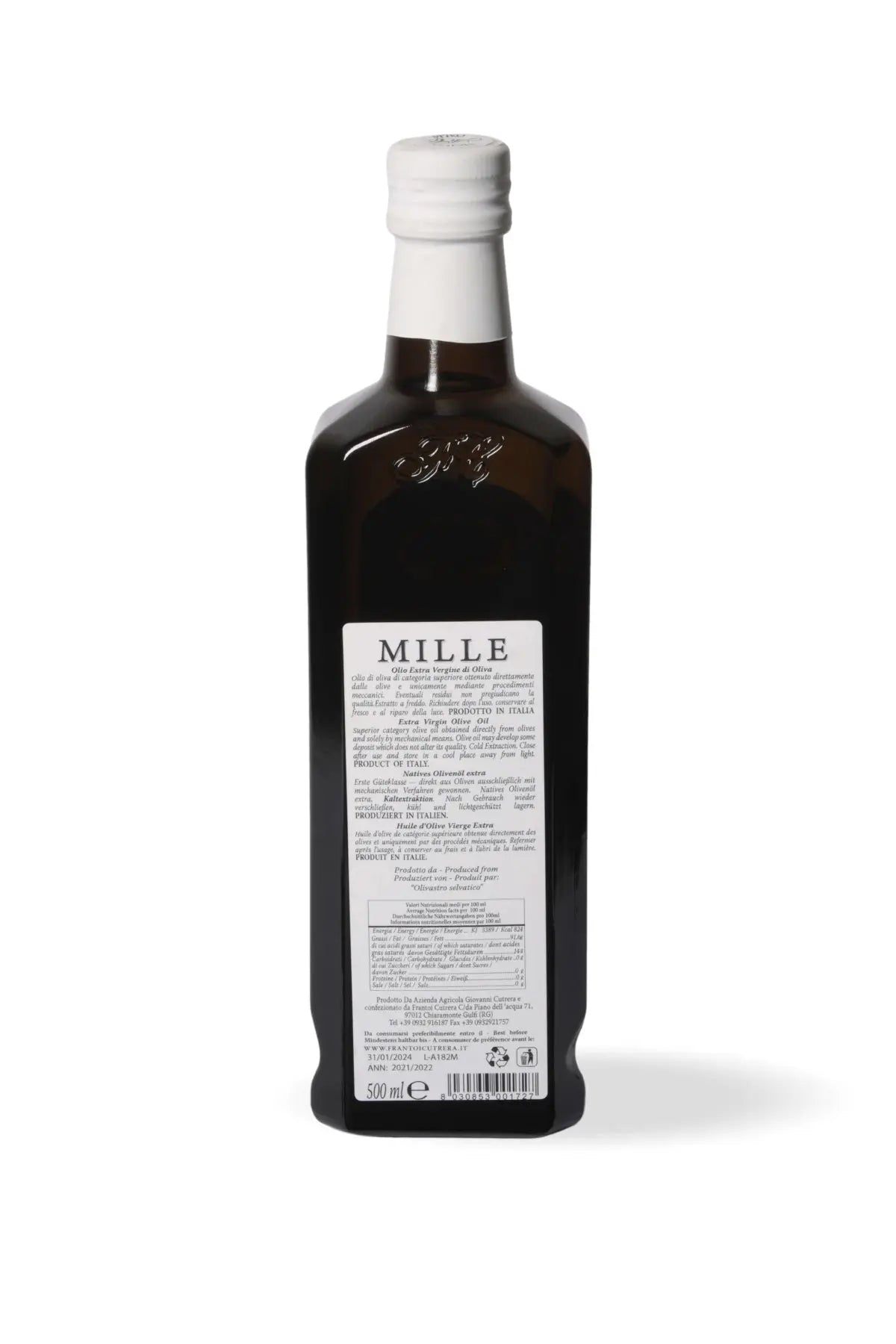
Within the range, Mille – Extra Virgin Olive Oil from Wild Olive represents the synthesis of the Cutrera vision on wild olive.
- The selected wild olive trees grow in specific areas of eastern Sicily, with environmental conditions that favor aromatic and phenolic concentration.
- The harvest is anticipated and pressing takes place quickly in the family oil mill, with cold extraction and calibrated parameters to best preserve volatile compounds and polyphenols.
- Each batch of Mille undergoes chemical analyses and panel tests to verify acidity, stability, and sensory profile, which must fall within the style defined by the company (intense fruitiness, marked but balanced bitterness and pungency).
The result is an extra virgin olive oil from wild olive with distinctly recognizable characteristics: intense green color, complex herbaceous nose, powerful palate and long persistence. Not an oil "for everyone", but an oil for those seeking an extreme sensory experience and a technically off-scale product compared to the average EVOO.
Who an olive oil like Mille is for
From a positioning point of view, a wild olive oil like Mille is primarily aimed at:
- Experienced consumers: olive oil enthusiasts, sommeliers, wine & food lovers who want to explore unconventional profiles.
- Restaurants and haute cuisine: chefs who desire a "signature" oil to use in a few key dishes, capable of leaving a mark.
- Gourmet gifts: customers seeking an iconic bottle to give to those who appreciate rare and technically important products.
To correctly communicate a product of this type, it is useful to speak not only of taste, but also of origin, agronomic selection, chemical analyses and sensory tests that stand behind each batch.
Conclusion: why the wild olive is a strategic resource for Frantoi Cutrera
The wild olive and wild olive oil are not a mere "experiment," but a strategic lever for Frantoi Cutrera to distinguish itself in the landscape of Sicilian and Italian oils:
- They allow to cover niche but high-value keywords, such as "wild olive oil", "wild olive oil", "oil from wild olive".
- They strengthen the perception of the brand's research, experimentation and technical depth.
- They offer a strongly identity-driven product (Mille) that tells the story of the Iblei Mountains territory and the oil mill in a different way.
Used correctly and communicated with technical yet accessible language, wild olive oil becomes the symbol of an extra virgin olive oil vision that goes beyond simple "condiment," towards a concept of oil as a sensory and cultural experience.
Share