




Home
>
Curiosities from the oil mill
>
How to Store Olive Oil: Practical Rules to Avoid Wasting Good Oil

How to Store Olive Oil: Practical Rules to Avoid Wasting Good Oil
Extra virgin olive oil degrades. It's not a question of if, but how quickly. Light, heat, oxygen, and time are the four enemies that turn quality oil into a rancid product, devoid of polyphenols and nutritionally useless. In this guide, you'll find practical rules for proper storage—from a freshly opened bottle to a pantry supply.
The four enemies of extra virgin olive oil
Understanding what degrades oil is the first step to preserving it well.
- Light: UV rays accelerate the oxidation of polyphenols and fatty acids. An oil in a clear glass exposed to light loses most of its bioactive compounds in 4-6 weeks. It's no coincidence that serious producers use dark glass, tin, or ceramic.
- Heat: Temperatures above 25-27°C accelerate oxidation. The absolute worst place to store oil is near the stove—where the temperature often rises above 30-40°C during cooking.
- Oxygen: Every time you open the bottle, you introduce oxygen. Oxidation is a chain reaction—more oxygen means faster degradation. This is why oil in an almost empty bottle deteriorates more quickly than oil in a full bottle.
- Time: Even under optimal storage conditions, extra virgin olive oil degrades. Polyphenols progressively decrease from bottling. It's not a product that improves with aging—unlike wine.
Where to store olive oil: practical rules
The right place
The ideal place to store olive oil is a dark, cool environment away from heat sources. In practice:
- Pantry or closed cabinet: Ideal if the temperature stays between 14°C and 18°C. Darkness is guaranteed, and summer heat won't enter if the cabinet is away from sun-exposed walls.
- Cellar: Excellent if the temperature is stable. The risk is humidity—which doesn't damage the oil directly but can deteriorate caps and labels.
- Refrigerator: Technically correct for preserving compounds (cold slows oxidation), but impractical. Oil partially solidifies below 10°C, forming a cloudy whitish substance—normal, not a defect. It returns to liquid at room temperature in a few minutes. If you use oil frequently, the refrigerator is not necessary; for long-term storage, it can be useful.
The wrong places
- Next to the stove: The most common place, and the worst possible. Heat + steam + light—three enemies together.
- On the windowsill or illuminated surfaces: Direct light degrades oil in a few weeks.
- In the cabinet above the cooktop: Heat rises—the temperature there can be 10-15°C higher than the rest of the kitchen.
The right container
The container is as important as the storage location.
- Tin: The best container for long-term storage. Opaque to light, inert, it protects from oxygen as long as it's sealed. After opening, it should be consumed within 3-4 months. Traditional olive oil producers store oil in 3-5 liter tins for this very reason.
- Dark glass (deep green or brown): Good protection from light. Pouring oil into clear or transparent glass is always a mistake—even if kept in a pantry, accidental exposure to light is inevitable.
- Ceramic: Traditional, effective. The problem is you can't see the oil level—risk of forgetting how much is left.
- Plastic: To be avoided for storage longer than a few weeks. Plastic is permeable to oxygen and can leach chemical compounds into the oil over time.
- Stainless steel: Excellent for large quantities (professional use). At home, it's practical only for cellar drums.
How long does extra virgin olive oil last: real shelf life vs. legal date
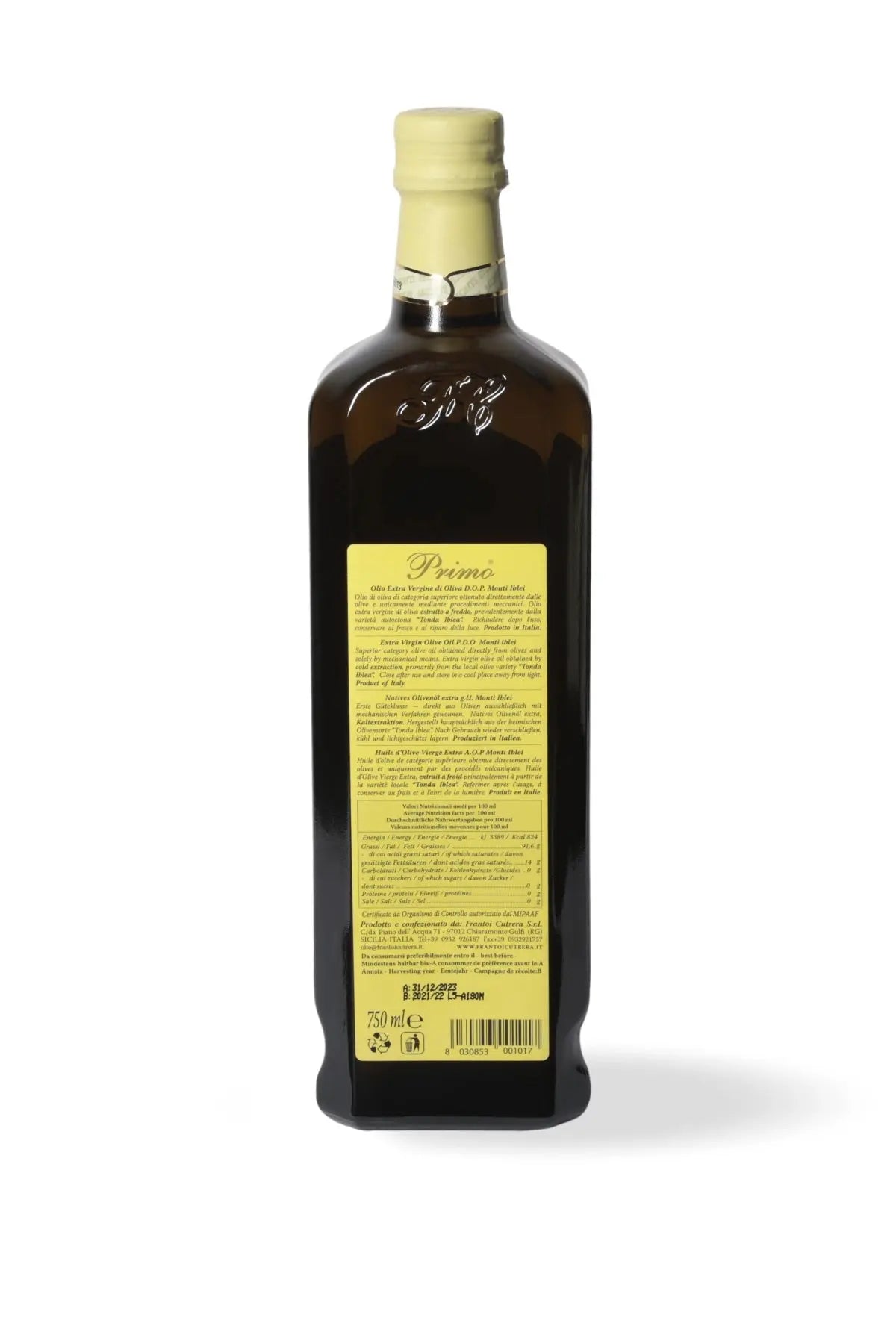
The best-before date (TMC—minimum durability date) on labels is legally set at 18 months from bottling. But this is a minimum legal guarantee, not a measure of quality.
The reality is more nuanced:
- Early harvest oil (October-November), well-preserved: Maintains an excellent polyphenol profile for 12-14 months from bottling, then progressively degrades.
- Late or standard harvest oil: Polyphenols already lower at the start—after 8-10 months, the profile significantly diminishes.
- Opened and poorly stored oil: Can become rancid in 4-6 weeks if exposed to light and heat.
- Opened and well-stored oil: Maintains acceptable quality for 3-4 months after opening.
The practical rule: consume the oil by the next harvest season. If you have oil from the 2024-2025 campaign, consume it by autumn 2025—when the new harvest arrives.
The oil cruet on the table: how to manage it
The cruet is convenient but also one of the main culprits for oil degradation in the kitchen. Some rules:
- Fill it small and often: A 250-300 ml cruet that empties in a week is better than a 1-liter one that sits on the table for months.
- Wash it every time you refill: Oxidized oil remaining at the bottom contaminates the new oil. A wash with hot water and detergent is sufficient.
- Don't keep it near the stove: Even during cooking, move it to the table or a cool corner.
- Always cap it: Every minute the cruet is open accelerates the oxidation of the oil it contains.
Managing your supply: how many bottles to buy
Buying oil in quantity is economically advantageous—but only if you can consume it within the right timeframe. A family of 4 people who use oil regularly consumes about 1 liter every 10-14 days. Based on this:
- A 3-liter tin lasts about 5-6 weeks—perfect.
- A 5-liter tin lasts about 8-10 weeks—acceptable if well-stored.
- Buying more than a 3-month supply is risky if you don't have a cool, dark cellar to store it in.
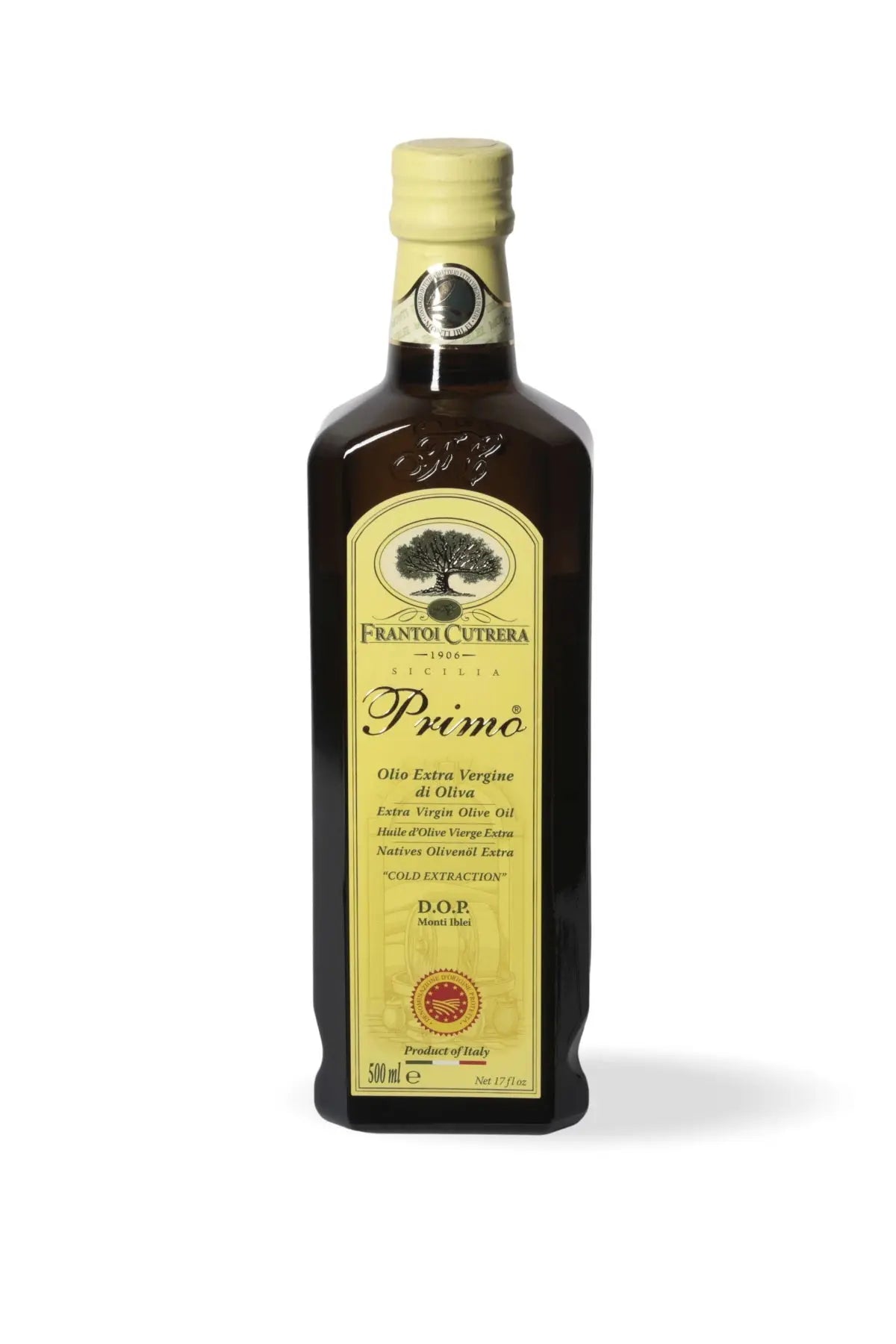
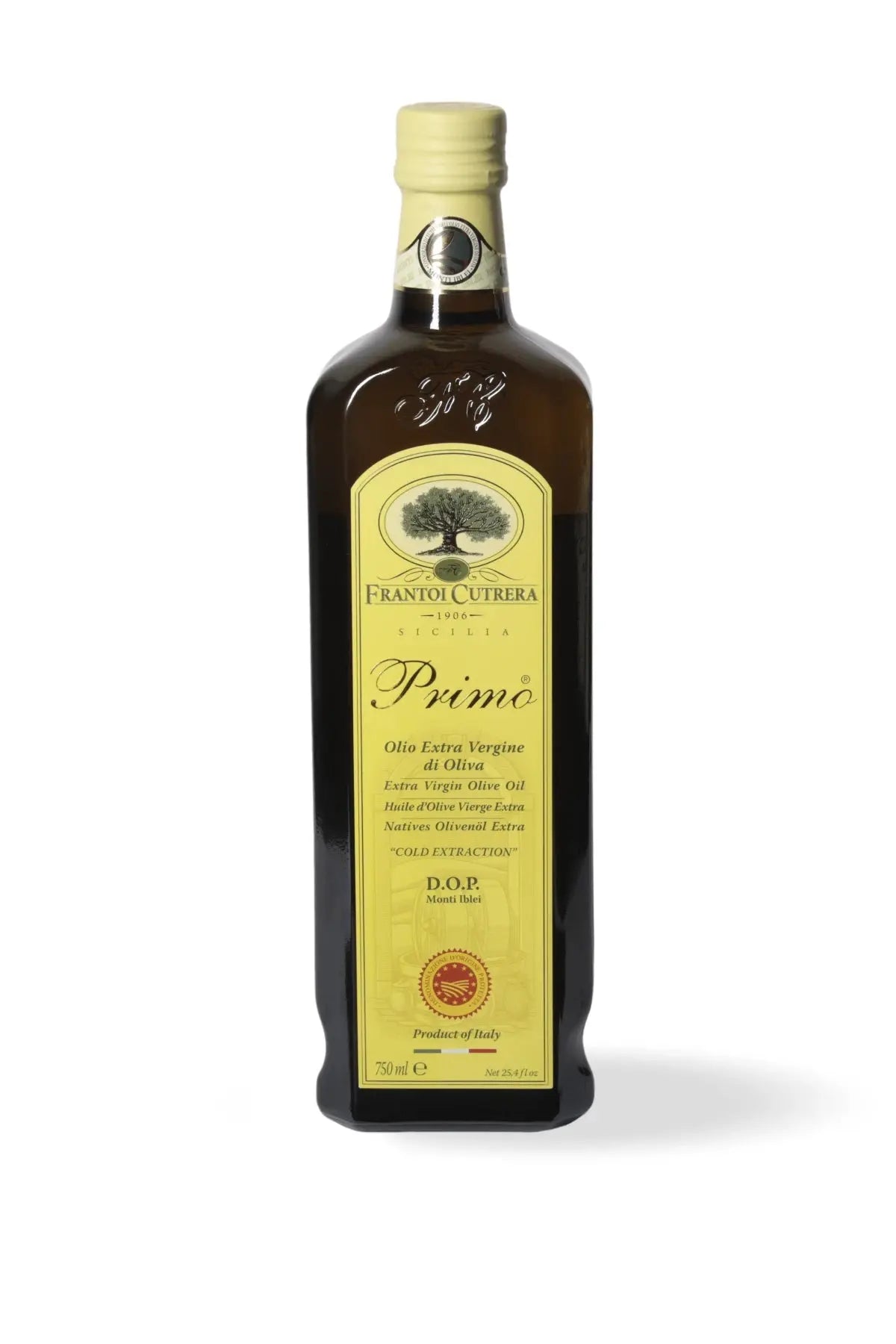
For very high-quality oils—monocultivar with a high polyphenol profile like Primo DOP Monti Iblei or Nocellara Salvatore Cutrera—it's advisable to buy quantities that can be consumed within 2-3 months of purchase, to enjoy their maximum freshness.
How to recognize rancid oil
Rancidity is the main defect of poorly stored oil. It's clearly recognizable:
- By smell: Odor of plastic, wax, crayon, or old lard—very different from the fruitiness of fresh oil.
- By taste: Sensation of stale fat, an oily and unpleasant aftertaste that lingers in the mouth.
- Visually: A more yellowish-brown color compared to the characteristic green of a young EVO (although color alone is not a reliable indicator).
Rancid oil is not dangerous to health—but it has lost almost all its nutritional benefits. Polyphenols have degraded, vitamin E has oxidized, and fats are altered. It's not worth using it.
Frequently asked questions
Should olive oil be refrigerated?
It's not necessary for daily use. The refrigerator slows oxidation but creates practical inconveniences (the oil solidifies). If you consume a bottle in 4-6 weeks and store it in a dark, cool cabinet, refrigeration is superfluous. For long-term storage (3+ months) or opened bottles you use rarely, the refrigerator is a good choice.
Is expired olive oil harmful?
Oil past its best-before date is not toxic—the date is a minimum durability date, not a safety date. If it's not rancid (normal smell, no unpleasant aftertaste), it's still usable. If it's rancid, it's better not to consume it—not due to acute risks but because it has lost all nutritional benefits.
Why does olive oil become cloudy or solidify?
Cloudiness (especially in unfiltered oils) is normal—it indicates the presence of pulp particles rich in polyphenols. It disappears at room temperature. Partial solidification below 10°C is also normal—the natural waxes in the oil crystallize with cold. It's not a defect; the oil returns to liquid without damage.
Can olive oil be frozen?
Yes, technically. Freezing preserves oil very well for long periods (up to 12-18 months). It doesn't alter the chemical profile, and thawing doesn't cause problems. It's an impractical but valid method for those who want to preserve an exceptional vintage oil.
Share