






EVO oil: meaning and characteristics
If you've bought a bottle of oil and wondered what that acronym — EVO — means, you're in the right place. In this article, we explain what EVO oil is, where the acronym comes from, what parameters it must comply with by law, and what distinguishes it from other categories of olive oil.
What EVO means: the origin of the acronym
EVO is an acronym for Extra Virgin Olive Oil. In Italy, the acronym is commonly used both on labels and in industry communication, as an internationally recognizable abbreviation.
The keyword is extra: the adjective is not decorative, but technical. It indicates that the oil has met stricter chemical and sensory parameters compared to simple "virgin" oil. For a complete explanation of all categories — extra virgin, virgin, refined, pomace — and how to read the label, read our complete guide to olive oil.
The legal requirements for being called EVO
EU Regulation 2022/2104 precisely defines the parameters an oil must meet to be classified as extra virgin. The main ones are:
- Maximum free acidity: 0.8% — expressed as oleic acid. This is the most well-known indicator: it measures the degradation of fatty acids. The lower it is, the better. A good artisanal EVO is often below 0.3%.
- Peroxide value: ≤ 20 meq O₂/kg — measures the degree of primary oxidation. A high value indicates degraded olives or processes.
- Total absence of sensory defects — rancid, mold, fusty, winey are defects that exclude EVO classification, regardless of chemical parameters.
- Presence of at least one positive attribute — "fruity" must be detectable by the official panel test.
An oil that fails even one of these parameters cannot legally be called extra virgin, regardless of what the label says.
The concrete difference between EVO and virgin olive oil
Virgin olive oil follows the same mechanical process as EVO — cold pressing, without chemical solvents — but with less stringent thresholds: acidity up to 2% and some permitted sensory defects. In practice, it is produced from lower quality olives or those processed less quickly after harvesting.
Olive oil (without adjectives), on the other hand, is a mixture of virgin oil and refined oil — the latter obtained with chemical solvents from defective oils. It has a neutral organoleptic profile and loses most of EVO's bioactive compounds. It is not an extra virgin.
Why acidity alone is not enough
Acidity is the most cited parameter, but it is also the most misunderstood. An oil can have 0.4% acidity and still be of mediocre quality — if the olives were healthy but the extraction process was slow, dirty, or at a high temperature, the polyphenols degrade and the sensory profile suffers.
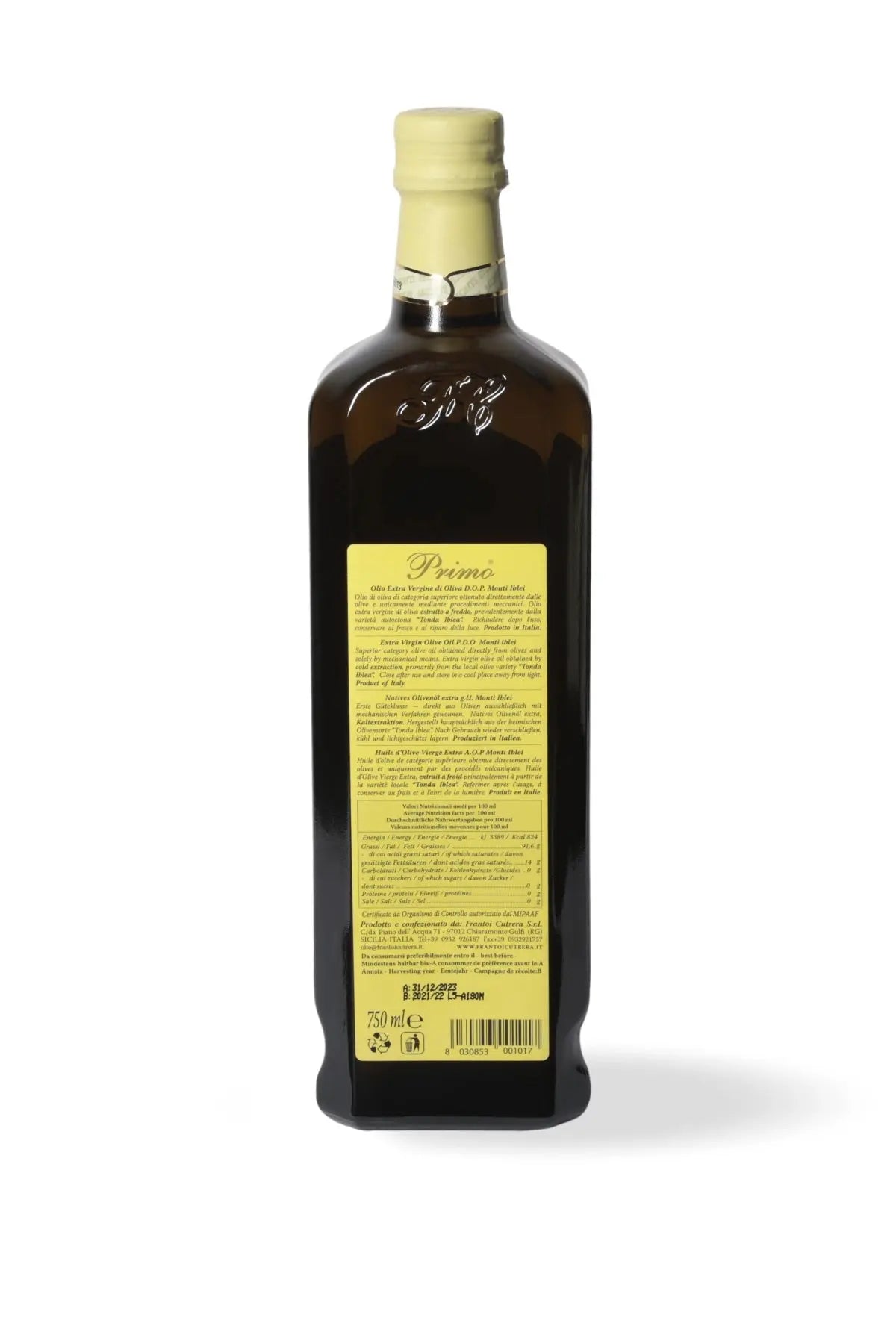
The parameters that serious producers voluntarily add to the label — harvest year, cultivar, extraction temperature, peroxide value — tell much more than acidity alone. To learn how to interpret all of them, read how to read the olive oil label.
EVO in cooking: a quick note
EVO oil is not just for raw consumption. Its smoke point (180-210°C) makes it suitable for most home cooking, including sautéing and light frying. Polyphenols and vitamin E make it more heat-stable than many refined vegetable oils.
To learn more about its use in cooking, smoke point, and pairings: EVO oil in cooking: let's debunk the myth of the low smoke point.
Which EVO to choose
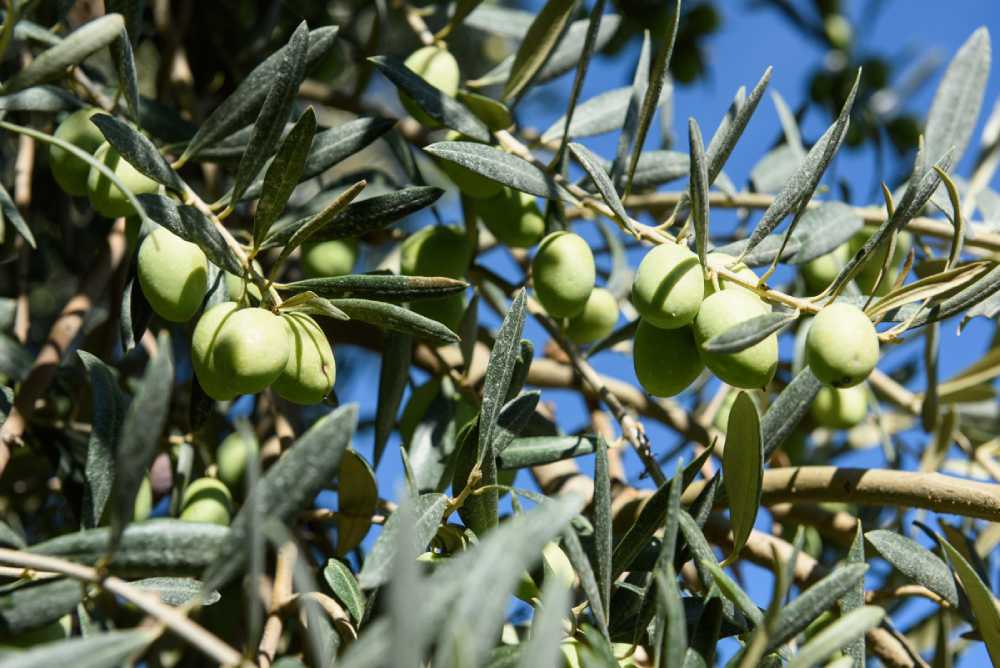
Not all extra virgins are the same. An EVO from Sicilian olives harvested in November differs profoundly from an international blend with a certified acidity of 0.8%: same acronym, vastly different experiences.
The factors that guide the choice — origin, cultivar, PDO and PGI, harvest year, price as a proxy for quality — are discussed in detail in our complete guide to olive oil. If you want to understand what makes Sicilian oil special, start with the Sicilian olive varieties.
Share