

Home
>
Curiosities from the oil mill
>
Olive Oil Price: Why it Costs What it Does and How to Navigate the Market
Olive Oil Price: Why it Costs What it Does and How to Navigate the Market
Extra virgin olive oil prices range from €4 to €40 per 750ml bottle. This isn't marketing—it's production economics. In this guide, you'll find the real factors that determine the price, how to use them to guide your purchase, and why a good artisan extra virgin olive oil cannot exist below a certain threshold.
The Minimum Threshold: Why Below €7-8/liter Is Almost Impossible
Before analyzing the factors, a concrete fact: the production cost of a liter of quality artisan extra virgin olive oil—manual harvesting, rapid milling, low yield—ranges between €5 and €9 for the mill alone, before bottling, labeling, distribution, and margin.
A 750ml bottle sold for €4 at the supermarket cannot contain oil produced to these standards. What you are buying is almost certainly an international blend of virgin and refined oils, or extra virgin oil from olives mechanically harvested at full maturity with high yields—legal, but a completely different product from an artisan single-cultivar oil.
This doesn't mean that every expensive oil is good. It means that every good oil has a minimum cost below which it cannot fall.
Factors Determining Price
1. Harvesting Method
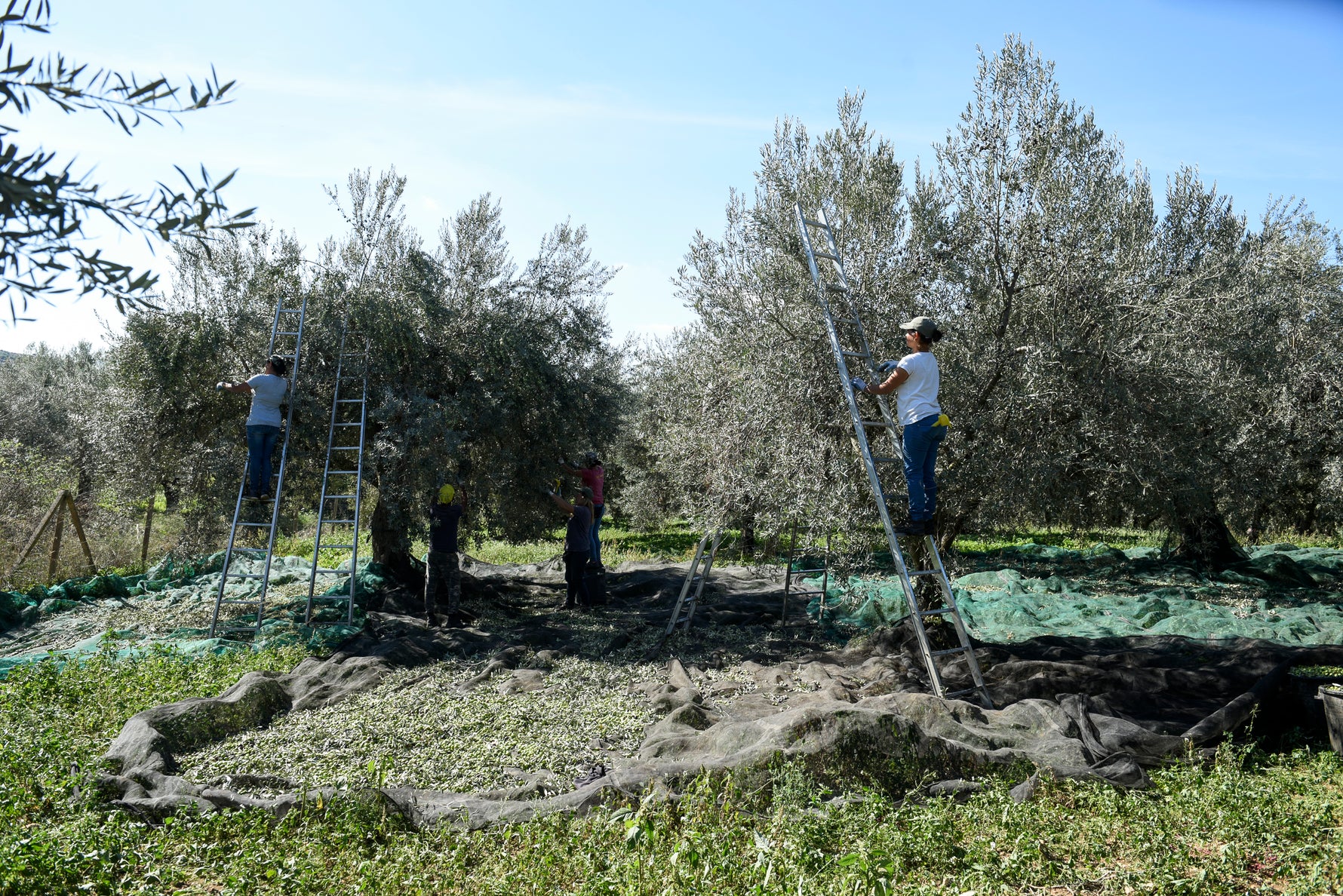
Harvesting is the heaviest cost item in artisan production. Three main methods, with very different costs:
- Manual Harvesting: 1.5-2.5 hours of work to harvest 100 kg of olives. To produce one liter of oil, 5-7 kg of olives are needed—which means 10-17 minutes of manual labor per liter. At the cost of agricultural labor in Italy (€12-15/hour), the harvesting cost alone is already €2-4 per liter.
- Harvesting with Mechanical Aids (Vibrating Combs): faster, less selective. Cost reduced by 30-40% compared to pure manual harvesting.
- Falling Harvesting or with Heavy Shakers: the most economical. Olives fall to the ground or are vigorously shaken—many get bruised, oxidation starts immediately, quality drastically decreases.
2. Harvest Time
Olives harvested early (October, still green or at veraison) have a low oil yield (10-14% of weight) but a polyphenol profile 3-4 times higher than olives harvested at full maturity (December, yield 18-22%). A producer who harvests early gets less oil from each tree and each hour of work—the cost per liter increases, but the quality is incomparably superior.
3. Cultivar Oil Yield
Different cultivars have different yields. Nocellara del Belice has a relatively low yield (12-16%)—more fruit is needed to produce a liter. Biancolilla has a high yield (18-22%)—more oil per kilo of olives. All other factors being equal, a single-cultivar Nocellara inherently costs more than a blend with Biancolilla.
4. Mill Size and Production Scale
A large mill that processes thousands of quintals amortizes fixed costs over enormous volumes. An artisan mill that produces 1,000-3,000 liters of selected single-cultivar oil has much higher unit costs. Economies of scale also work in olive oil—at the expense of quality when a certain threshold is exceeded.
5. Certifications
DOP, IGP, and Organic have direct costs: consortium registration, mandatory chemical and sensory analyses, inspections, traceability. A DOP Monti Iblei adds €0.30-0.80 per liter just in certification costs. This is not a cost that goes to the producer as profit—it's a guarantee cost that the consumer pays to ensure origin and compliance with regulations.
6. Packaging
A 750ml dark glass bottle costs €0.40-0.80 empty. A 3-liter tin costs €1.20-1.80. The cap, label, and packaging add another €0.30-0.60. For a €12/bottle oil, packaging accounts for 10-15% of the final price.
7. Distribution Channel
Oil sold directly by the producer online has completely different margins compared to the same oil that goes through an importer, distributor, large-scale retail buyer, and supermarket. Each step adds a mark-up. An artisan oil sold for €18 on the mill's website could cost €28-32 on the shelf of a premium chain—not because the producer earns more, but because the supply chain is longer.
How to Use Price to Guide Your Purchase
Four indicative price ranges for the Italian market:
- Below €5/bottle (750ml): generic olive oil or extra virgin from industrial production. Useful for cooking where oil quality is not perceived—but don't expect any of the benefits of polyphenols.
- €5-9/bottle: commercial quality extra virgin. Can be good if the company is serious and the supply chain is short—but the range is competitive, and there are many opaque products. Look at the harvest year and specific origin.
- €10-18/bottle: range for quality artisan extra virgin olive oils. Here you'll find regional DOPs, blends of indigenous cultivars, IGPs with controlled supply chains. The quality/price ratio is often excellent.
- Above €18/bottle: single-cultivar from early harvest, top DOPs, competition oils. The difference compared to the previous range is real but decreases at the margin—this is the range for those who already know olive oil and want the best.
More Reliable Quality Signals on the Label Than Price
Price is a proxy for quality—not a guarantee. These label elements tell you more than the price:
- Harvest Year (Campaign): the most important signal. A producer who doesn't indicate the year is hiding something.
- Specific Origin: "Monti Iblei, Ragusa" says much more than "100% Italian." The more specific the origin, the more the producer is willing to be judged on the terroir.
- Declared Cultivar: indicates transparency and product pride.
- Indicated Acidity: not legally required—if present, it's a positive sign. Below 0.3% is excellent.
- DOP or IGP: doesn't guarantee excellence but guarantees origin and compliance with regulations.
For a complete guide on how to read olive oil labels: complete guide to olive oil: types, label, and how to choose it.
The True Cost of Quality Oil: Your Pocketbook
An average consumer uses about 15-20 liters of oil per year. With a €12/liter oil, you spend €180-240 per year—about €0.50-0.65 per day. With a €20/liter oil, you spend €300-400 per year—€0.82-1.10 per day.
The difference between a commercial extra virgin and a quality one, in daily spending, is €0.30-0.60 per day. For those who cook with oil every day, this differential is probably the best quality/price ratio in the entire food expenditure.
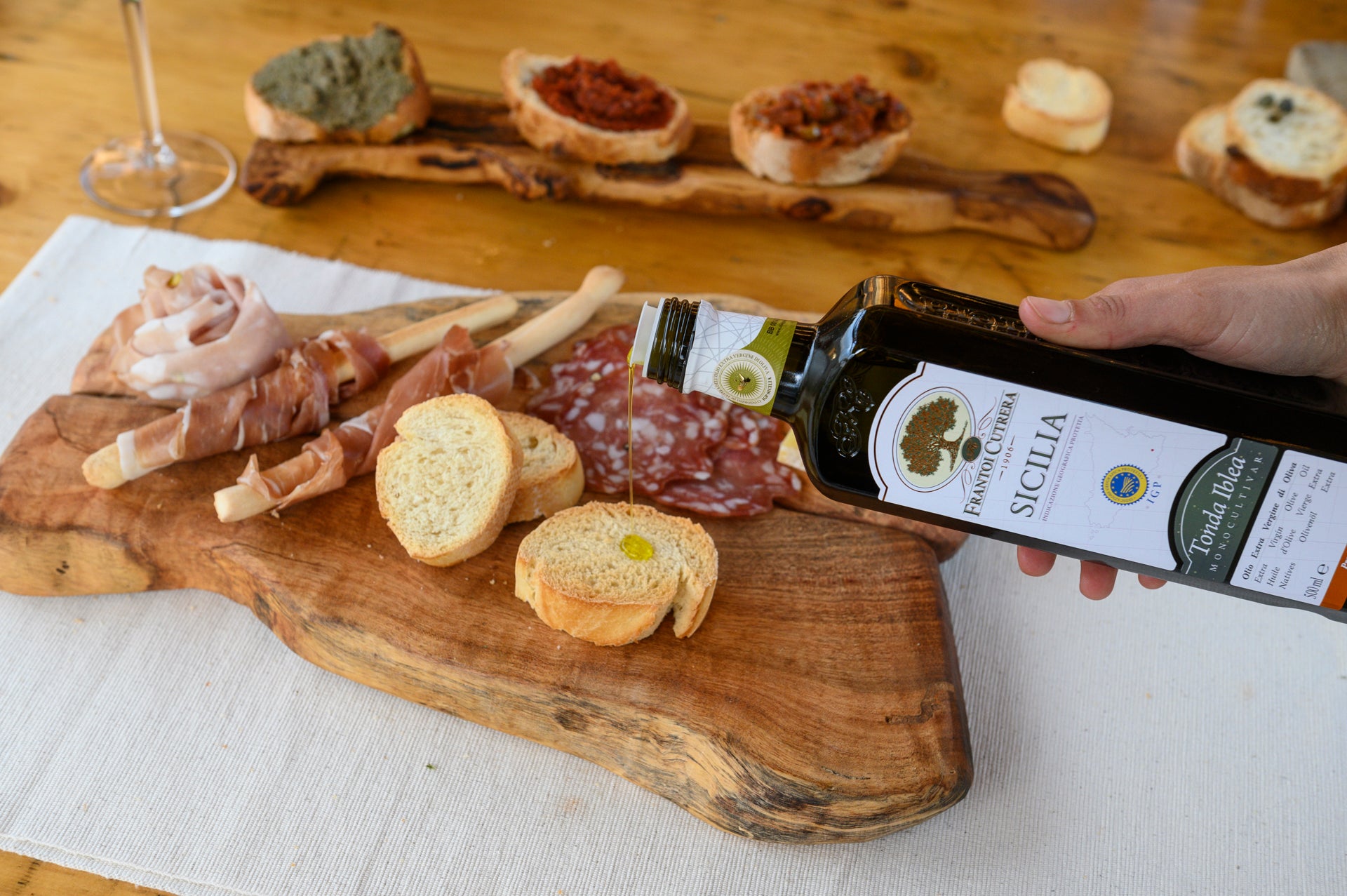
If you want to explore the Frantoi Cutrera range starting with everyday use, the Pertutto Cutrera is the entry point—a blend of Sicilian cultivars designed for every day, with the quality profile of an artisan mill at an accessible price. For those who want the best, the Primo DOP Monti Iblei is our flagship oil.
Frequently Asked Questions
Why has olive oil become so expensive in recent years?
Between 2022 and 2025, drought in Spain (the world's leading producer, 40% of European oil) drastically reduced production for two consecutive seasons. Prices at the source tripled, with cascading effects across the market. Since 2025, Spanish production has partially recovered, but prices have not returned to pre-crisis levels—part of the increase seems structural.
Is Italian oil more expensive than Spanish or Greek oil? Why?
Labor costs in Italy are higher. Italian companies are, on average, smaller—fewer economies of scale. Italian DOP and IGP certifications impose more restrictive regulations. And the brand positioning of premium Italian oil is historically superior. All factors that justify the differential—but require the producer to truly leverage them, not just use them as an excuse for high margins on mediocre products.
Is it worth buying oil in 3-5 liter tins?
Yes, if consumed within 2-3 months of opening and stored correctly. Tin is the best container for oil—opaque, inert, protects from oxygen. The price per liter is always lower than bottled oil. The only risk is buying more than you can consume in good time.
Share